
The Hidden Cost of AI-First Customer Service: How One Airline’s Push for Efficiency Left Passengers Exposed to Scams
My $940 Canceled Flight Exposed How AI-Powered Customer Service Opens the Door for Scammers
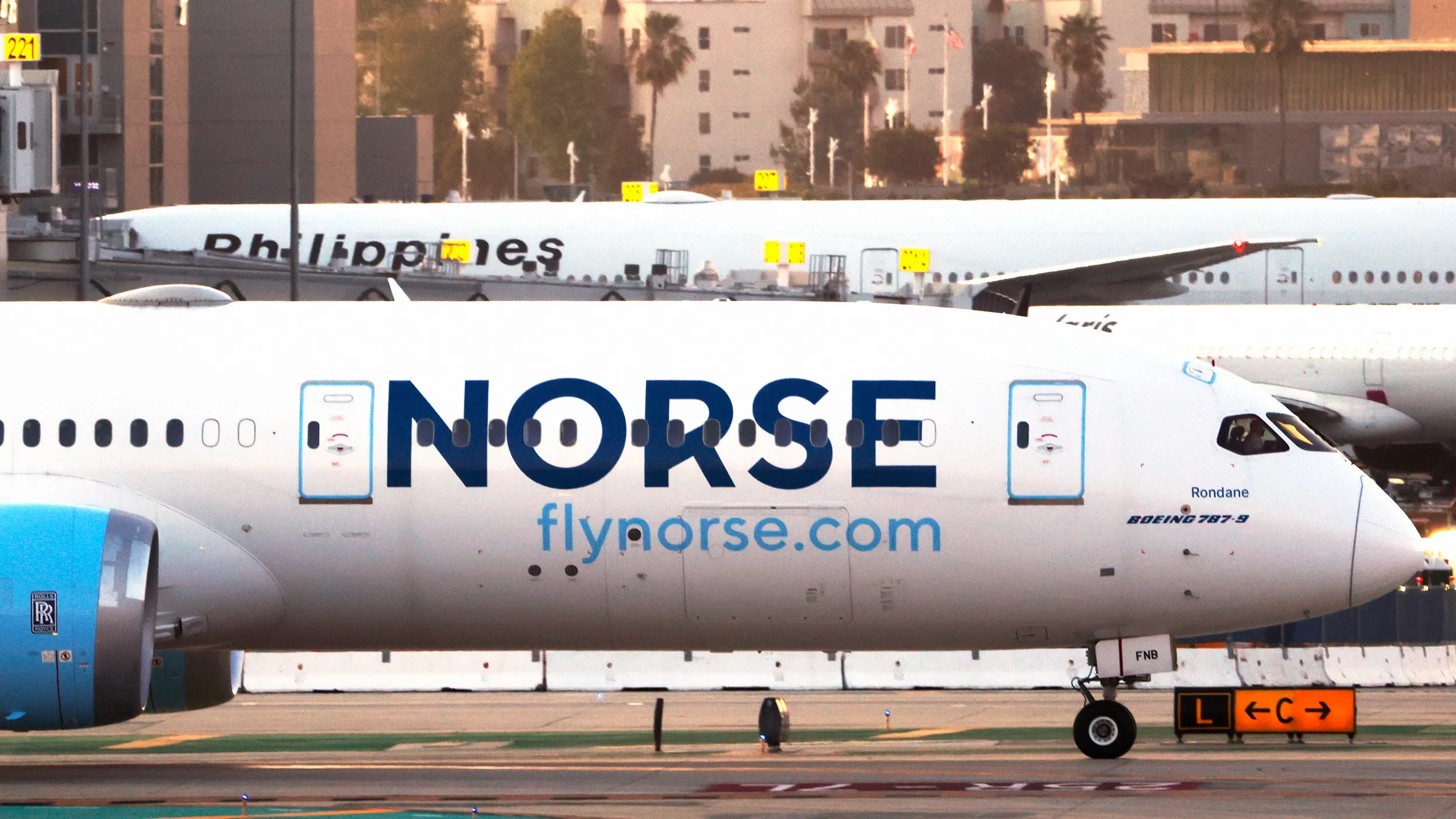
On March 31, an email notification landed in my inbox from Norse Atlantic Airways. It informed me that my upcoming $940 round-trip flights to Rome had been canceled, and I had a 14-day window to submit a refund request.
At first, I felt no immediate alarm. That calm faded quickly, though: the airline’s refund request portal failed to load, no matter which of two browsers I tried across three different devices. After multiple follow-up emails to the company went completely unanswered, I searched for a public customer service phone number, only to find none listed anywhere. Scrolling through Reddit, I found dozens of user posts sharing similar horror stories, calling out Norse’s reportedly messy, unresponsive customer service. That same day, I submitted a public records request to the U.S. Federal Trade Commission (FTC), hoping to get a clearer picture of just how common this frustrating experience was for other passengers.
I ultimately received roughly 75 detailed complaints from consumers who had either purchased tickets from or attempted to book with the airline. Many of these accounts described a customer service system where the complete lack of access to a human representative created a gaping hole that scammers were all too eager to exploit. Out of the 41 complaints that included a specific monetary amount lost, 21 stated they were out more than $1,000 after their experience.
Norse Atlantic Airways does employ human customer service staff, but in recent years the carrier has prioritized a tech-first business model, leaning heavily on AI agents to run its support operations. “Technology will allow us to offer higher availability and better customer support, while still keeping fares low enough that more people can afford travel between continents,” Bård Nordhagen, the company’s chief customer and communications officer, told WIRED. But if my experience and the dozens of other passenger accounts are any indication, this AI-driven model of customer service is time-consuming, deeply frustrating, and sometimes financially devastating for travelers.
The Future Is Now
Launched in February 2021, Norse Atlantic Airways brands itself as a “modern, long-haul, low-cost airline” built around a “lean” workforce. Early on, the company adopted a tool from customer service tech firm Sprinklr that created a “unified” inbox for all customer support queries. Based on archives of the airline’s website, Norse appears to never have publicly listed a customer service phone number at all.
In January 2025, AI firm Kindly published a blog post detailing how it built a chatbot for Norse, alternately named “Odin” or “Odin’s Wingman.” According to the post, Norse even removed its public customer support email from its help page to make Odin the “primary support channel” for all passenger questions. By January 2026, Norse had retired the Odin chatbot and replaced it with its current AI agent, Freya, built by AI company Delight.ai.
Delight.ai reported that the airline’s rate of resolving customer inquiries without any human input “jumped from 60 percent to 80 percent” within just two weeks of Freya’s launch. “We see the future of our customer support team as AI agent managers,” Alf Lim, Norse’s chief product officer, shared in a Delight.ai blog post. Lim added that Freya is a “core member of the team” at Norse. The blog explained that Freya allows Norse to “upskill” its existing customer support staff into these AI manager roles, defined as specialists who continuously optimize and retrain the AI system, and step in to help when human assistance is required.
Nordhagen told WIRED that Freya has been a major success for the airline, and now handles “99 percent of all passenger inquiries.”
A Scammer’s Paradise
A clear, recurring pattern emerged across nearly all the FTC complaints: when passengers needed to change a flight or update their booking, they turned to Google to search for Norse Atlantic Airways’ customer service phone number. Eighteen of the complaints explicitly stated that they were scammed after clicking on results that led to fake scam websites and fraudulent phone numbers.
In some cases, scammers told passengers they owed additional money for a flight they believed they had already paid for. In others, scammers claimed passengers had to pay an exorbitant fee to modify their travel itinerary. Passengers handed over their credit card details, and in some worst-case scenarios, their social security numbers, only to find massive unauthorized charges on their statements shortly after.
One complaint filed in March 2025 described a senior couple trying to purchase tickets over the phone. The scammer on the line claimed each of their three separate credit cards had failed to process the payment, so they shared card details for all three. “Stupidly gave him my date of birth and last 4 digits of my social security number,” the complainant wrote. By the time they realized they had been scammed and canceled their cards, an unexplained charge of $1,258.88 had already gone through. “We are 72 and 79 years old, we are scared,” the complaint read. “Please help.”
This problem has become so widespread that Norse’s official website now posts a prominent warning about “online scam and fraud.” At the time of writing, a Google search for “Norse Atlantic airways phone number” pulls up links to three separate Yelp pages that list two different phone numbers for the airline. Both of these numbers appear to be fraudulent. When WIRED called the first number, a man answered claiming to be a representative of Star Alliance, the global airline network made up of 26 carriers. But Star Alliance’s official website does not list Norse Atlantic as a member airline, nor does it list that phone number anywhere. A Star Alliance representative later confirmed the number is not connected to the company, and that Norse is not a member. When WIRED called the second number, a different man said he worked for “Flight Travel Portal,” a third-party booking service that has no verifiable public existence. When asked about online posts labeling the number as a scam, he was unfazed, saying anyone can post anything online.
A small number of complaints noted that even when passengers reached out to their credit card companies or the third-party travel sites they used to book, they were redirected back to Norse or told there was nothing the other companies could do to help. In August 2024, a traveler in New York wrote that they bought a $397 one-way flight from Paris to New York through Priceline, which included cancellation insurance from Xcover and split payment through Affirm. When they realized they could no longer make the flight, they contacted Priceline, which told them they had to reach out directly to Norse. After searching Google for Norse’s phone number, they ended up sharing their credit card details with scammers, forcing them to lock their card immediately. Neither Xcover nor Priceline responded to WIRED’s requests for comment. An Affirm representative said the company does not comment on individual customer cases, and noted that all return and refund policies are set by individual merchants. “The flight is scheduled for tomorrow, and despite reaching out to Norse Airways three days ago via email, I have gotten no response,” the complainant wrote at the time. “I have contacted Priceline, Xcover, and Affirm, but none of them can help. I’m worried that without intervention, I will be marked as a no-show, which will make getting a refund even harder.”
Even passengers who avoided being scammed still ended up losing money. One traveler from Los Angeles reported that they were denied boarding for their Norse flight from Rome to Los Angeles. “At the airport in Italy, there were no Norse Atlantic staff on site, only contracted workers who had no way to contact the airline directly,” the complaint read. “The only communication channel available was Norse’s chatbot; the airline has no live customer service or phone line.” As a result, the passenger said they were forced to book last-minute, extremely expensive alternative flights to avoid getting stuck abroad with a child.
A Human Touch
On a 2024 earnings call, Norse’s then-CEO Bjørn Tore Larsen said the company is constantly “pursuing ways to become more efficient, and that includes major investments in technology,” adding that these investments “deliver very quick returns, both by cutting costs and boosting revenue.” In early May of this year, Norse announced it would cut its administrative staff by 35 percent. Two weeks later, during a subsequent earnings call, current CEO Eivind Roald said the airline is exploring potential sale or merger opportunities.
Erie Meyer, a senior fellow at the Center for Law and the Economy and former chief technologist at both the FTC and the Consumer Financial Protection Bureau, told WIRED that the FTC complaints against Norse’s customer service model are “particularly egregious.” Passengers are “not just vulnerable to scammers—they’re practically served up to them on a silver platter,” she said. Meyer recommends that passengers who run into this issue file claims with their state attorney general’s office, which is more likely to investigate the issue, respond directly to consumers, and identify other impacted travelers. The FTC declined to comment on specific companies or practices when reached by WIRED.
As for my own refund case, I ultimately got my money back thanks to one thing: talking to a human. The same day I submitted my public records request to the FTC, I emailed Nordhagen, Norse’s chief customer and communications officer, directly. While I clarified I was reaching out as a customer first, not as a journalist, this workaround is unlikely to be accessible to most passengers. Within an hour, I got an email confirming my refund was being processed, and the money hit my bank account just two days later.