
Welcome to the waymo world cup
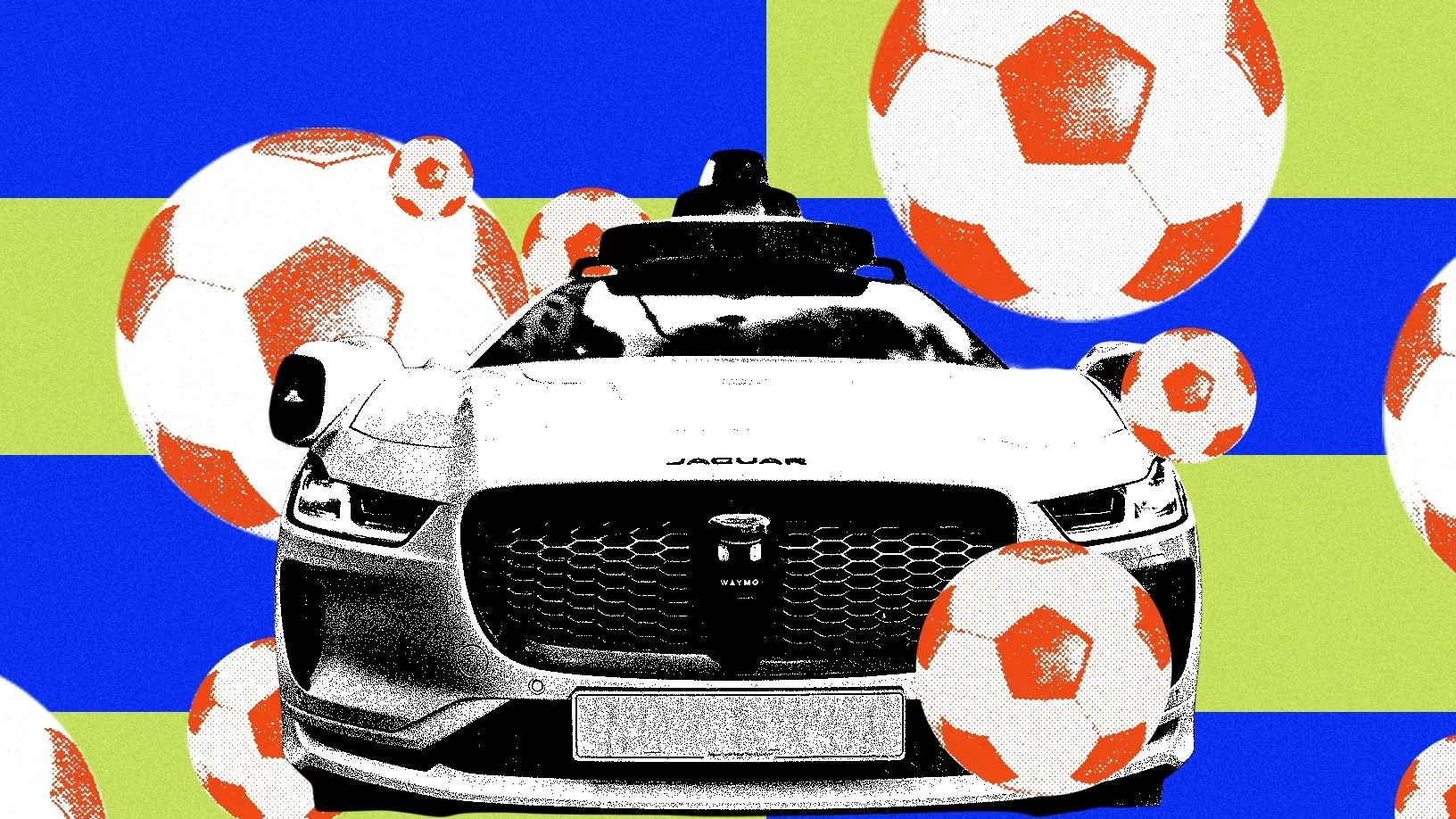
Waymo Gears Up for Its High-Stakes Debut at the 2026 FIFA World Cup
Alphabet’s autonomous vehicle subsidiary Waymo, which currently operates commercial robotaxi services across 11 U.S. metropolitan areas, says it is ready to serve attendees of the upcoming 2026 FIFA World Cup. Tournament-goers will be able to hail fully driverless rides to and from six of the 16 North American World Cup venues, covering stadiums in Atlanta, Houston, Los Angeles, Miami, and the San Francisco Bay Area.
The month-long global soccer event, projected to draw roughly 6.5 million visitors across the continent, could be a make-or-break spotlight moment for Waymo. The company currently delivers around 500,000 paid rides per week — a figure that pales next to ride-hailing giants Uber and Lyft, but an impressive milestone for a fully driverless service. Waymo has aggressive expansion plans: it aims to launch service in 20 additional U.S. markets this year alone, with upcoming international entries on the horizon in London and Tokyo. Its app is already available for download in 13 countries (including Germany, the U.K., India, and Japan) and supports 15 languages, meaning the World Cup will likely be the first driverless ride experience for many international travelers who have never had access to robotaxis in their home countries.
But the high-profile event also carries significant risk of public, high-visibility missteps, after a string of setbacks for Waymo this spring. The company was forced to pause service in multiple markets after its vehicles failed to safely navigate flooded streets — a flaw that already prompted a nationwide software recall. In May, Waymo also suspended its driverless highway service, which had offered riders faster travel to select destinations since late 2024, over internal concerns about how its systems perform around active construction zones.
Waymo spokesperson Sandy Karp notes that the company is working closely with local authorities to prepare for the World Cup and all surrounding events. If everything goes according to plan, the first major World Cup with widespread autonomous vehicle service will feel largely routine for most riders.
Self-driving technology has long been hyped to transform transportation: it promises expanded mobility for people unable to qualify for driver’s licenses, a full restructuring of the travel industry’s economics, and widespread disruption to professional driving jobs. But when it comes to moving crowds for major events, driverless cars face the exact same core limitations as human-driven vehicles. Tens of thousands of fans all want to arrive at and depart from the stadium within a narrow window of time, and there is only so much road capacity to accommodate that surge.
“There’s never going to be a perfectly orderly process with no congestion,” says Adam Millard-Ball, a professor of urban planning at UCLA’s Luskin School of Public Affairs. “Geometrically, you’re not going to be able to have ‘front door’ pickups for everybody.” The future of transportation will bring many changes, but eliminating traffic entirely is not one of them — and this is the exact same challenge that human-driven ride-hailing services have grappled with for decades. It is also why Uber and Lyft operate the way they do at large venues today.
Since ride-hailing first expanded across the U.S. in the late 2000s, cities, airports and stadiums have developed systems to manage on-demand transportation, even if they cannot fully control it. Early on, Uber pickups happened curbside right outside airport baggage claim, but most airports now route ride-hail passengers to designated, off-street pickup lots. The same model is used at most major stadiums, and many of these existing dedicated zones already accommodate Waymo vehicles today.
“The City of Santa Clara currently collaborates with rideshare services to create service-area locations around Levi’s Stadium during event days,” Lieutenant Eric Lagergren of the Santa Clara Police Department told WIRED in an email — event days that already include roughly eight San Francisco 49ers home games every season. “The rideshare and public-transportation service area locations in Santa Clara will remain active for all FIFA World Cup 2026 matches being hosted in the City of Santa Clara.” It is the same routine, just for a different global sporting event.
This dynamic is both a common critique of autonomous vehicles and a core talking point for its proponents: a vehicle is a vehicle, no matter who (or what) is behind the wheel. AV developers often point out that first-time riders quickly grow accustomed to the once-futuristic experience of driverless travel, and most just turn to their phones like they would during any other taxi ride. For years, Waymo and other robotaxi companies have also argued that their vehicles should not face significantly different regulation than human-driven ride-hailing services.
On the downside, that means the same familiar pain points: stop-and-go game-day traffic and long wait times for pickups will still be part of the experience. That said, autonomous technology could bring small incremental improvements to how crowds are moved. Millard-Ball points out that Waymo controls its entire fleet as a single operator, unlike ride-hailing which relies on thousands of independent contractors. This means Waymo can coordinate its vehicles far more effectively — for example, its cars can form an orderly queue for pickups at high-demand locations.
But this type of system efficiency often clashes with the convenient, personalized pickup experience that most riders expect: a car that waits or circles the block while you wrap up the game, and pulls up to the curb exactly when you are ready to leave. That kind of on-demand convenience is inherently messy, not orderly.
To get a glimpse of what efficient World Cup-era transportation will actually look like, we can look to proven solutions that already work: public transit like trains and buses, which will already carry the majority of fans to and from matches during the tournament. Even Uber has adopted this bulk transit model for major events, with its Uber Shuttle product that lets fans pre-book seats on shared minibuses departing stadiums after games in markets including New Jersey, Boston, Miami, and Dallas. It may not be the zero-traffic futuristic dream many imagined, but it is the future of transportation we are getting: welcome to it.