
Crypto guys bought the answer to the cias mysterious kryptos sculpture
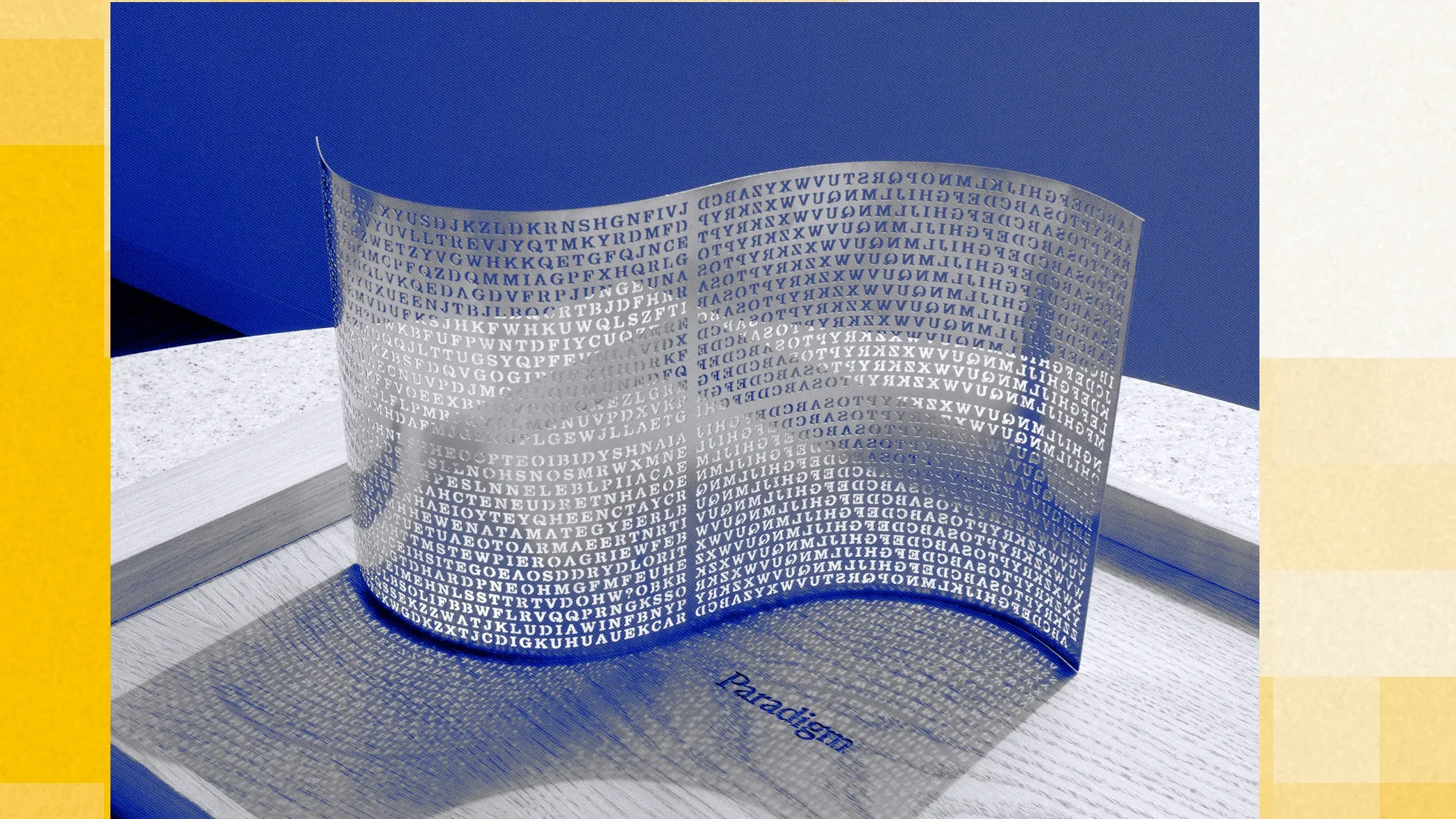
On a windswept blustery March afternoon, sculptor Jim Sanborn welcomed a small group of guests to his private studio, tucked away on an isolated island in Chesapeake Bay. The visitors sat Sanborn down in front of a blank laptop, and he typed out one of the world’s most famous unbroken secrets. The group ran the message through a custom cryptographic hash function, uploaded the output to secure cloud storage, then wiped every trace of the original text from the device completely. Sanborn left the interaction hoping this step would finally let him shed a decades-old burden. But has it?
This moment marks the latest unexpected turn in the decades-long saga of Kryptos, Sanborn’s iconic public sculpture that has stood on the grounds of CIA Headquarters in Langley, Virginia, since 1990. The work is a 9-foot-11-inch copper S-curve, carved with four separate panels of encrypted text. Ever since its unveiling, both professional cryptanalysts and amateur puzzle lovers have raced to crack its codes. Within 10 years, three of the four panels were solved—but the 97-character fourth panel, nicknamed K4, has never been broken.
For decades, Sanborn has sorted through thousands of proposed solutions, every single one incorrect. On one hand, the lingering mystery of Kryptos’ hidden message is a perfect reflection of the intelligence community’s core mission of chasing hidden truth. On the other, it became an unwanted weight: in recent years, Sanborn has been flooded with nonsensical, AI-assisted submissions that left him overwhelmed.
Sanborn had finally had enough. The 80-year-old artist also wanted to shore up his retirement savings, so in 2025 he arranged for an auction to sell the verified answer to K4—along with the solution to K5, a fifth never-before-revealed cipher panel. That November, the winning bid reached nearly $1 million for the prize package, which also included a mini scale model of the sculpture and related historical ephemera. Sanborn walked away with $770,000 after fees. The identity of the buyers and their plans for Kryptos remained a closely guarded secret—until now.
Today, the winner is stepping out of the shadows. Paradigm, a crypto-focused venture capital firm, has taken over official stewardship of the puzzle, and will vet all future guesses until someone finally cracks the code for good.
Like almost every chapter of the Kryptos story, last year’s auction came with its own wild twist. Just weeks before the bidding deadline, two independent researchers, Jarett Kobek and Richard Byrne, contacted Sanborn with a bombshell: they had already found K4’s plaintext. The Smithsonian Institution holds Sanborn’s Kryptos-related materials in its archives, and Byrne traveled to the collection to photograph its full holdings. Going through the photos, Kobek discovered that Sanborn had accidentally left a full copy of K4’s plaintext in his archived papers. In the end, the researchers agreed not to publish their solution, the Smithsonian restricted access to the Kryptos collection, and the auction moved forward as planned.
So what is Paradigm? The firm was co-founded by a co-founder of Coinbase, the world’s largest crypto exchange. Originally built to back crypto startups and develop open-source crypto tools, the firm has recently expanded into AI and robotics—a timely shift, as Bitcoin prices have plummeted and mainstream hype around blockchain has cooled sharply.
Dan Robinson, a researcher who joined Paradigm in 2019, has been fascinated by cryptography since he was a child. Last summer, he read an article about the upcoming Kryptos auction and began pitching his firm on bidding for the prize. “There’s really nothing else like it,” he says. “It fits a lot of our philosophy about the kind of things we like to support in the world.” Beyond that, Robinson hopes that owning Kryptos will help Paradigm attract top technical and cryptography talent to the firm.
To make the puzzle more accessible and discourage wasteful brute-force guessing attempts, Paradigm has drastically cut submission fees: where Sanborn used to charge $50 per guess, the firm now charges just $1 per submission. Paradigm will also host a series of lead-up contests with increasingly difficult decoding challenges; the first person to solve each of these warm-up puzzles wins $1,000 cash.
The prize for cracking K4 itself is not cash—it’s glory. Plus, the winner gets exclusive access to a pre-recorded video message Sanborn made specifically for the first person to break the code.
In theory, Kobek—the researcher who already found K4’s answer in the Smithsonian archives—could upend the entire project just by publishing the plaintext. But when I reached him this week, he reaffirmed the promise he made last year: “There will never be a moment in which the plaintext is published by me.”
Robinson says even the Paradigm team does not know K4’s solution—they have deliberately never looked at the sealed envelopes holding the answers. Starting today, aspiring codebreakers can submit their proposed solutions to the new official Kryptos website. Because the correct answer was already run through the hash function to create a unique digital identifier (called a hash), all submissions will go through the same process. If the two hashes match, the 34-year-long quest will be over. Sort of.
There is still the mystery of K5 waiting. Sanborn says that once K4 is solved, K5 will become solvable—how exactly that works is just another Kryptos secret for now. Robinson says when the time comes, Paradigm will publish the full K5 ciphertext publicly and open up submissions for the next chapter of the puzzle.
In theory, this arrangement should give Sanborn the closure he wanted. He has passed stewardship of his secrets to Paradigm, he handed the firm the sealed envelopes holding the plaintext answers to both K4 and K5 (which they confirm they have not opened), and he has cashed his check. But when I spoke to him, it was clear he has not truly let go.
“I guarantee there will be people that don’t know anything about the auction, and I am going to tell them when they contact me to please contact Paradigm,” he says. But knowing the Kryptos community, he suspects many will not listen. In that case, he will not turn them away. “I mean, I’m not shutting down my email,” he says. “People might still want me to, you know, look at it.”
He even speculates he may embed a teaser of the K5 ciphertext in an upcoming public work: he has recently created a series of “projection cylinders,” where he beams long streams of text across large public surfaces. “I could embed K5 in that,” he says. “It would be in there, waiting.”
So even though Paradigm is now the official keeper of the Kryptos secret, Sanborn has not faded away. All the while, his iconic creation still stands at Langley, quietly mocking even the mighty intelligence community’s efforts to uncover its hidden truth.
This is an edition of Steven Levy’s Backchannel newsletter. Read previous newsletters here.