
UK Unveils Landmark Ban On Under-16 Social Media Use, Sparking Bipartisan Support And Widespread Criticism
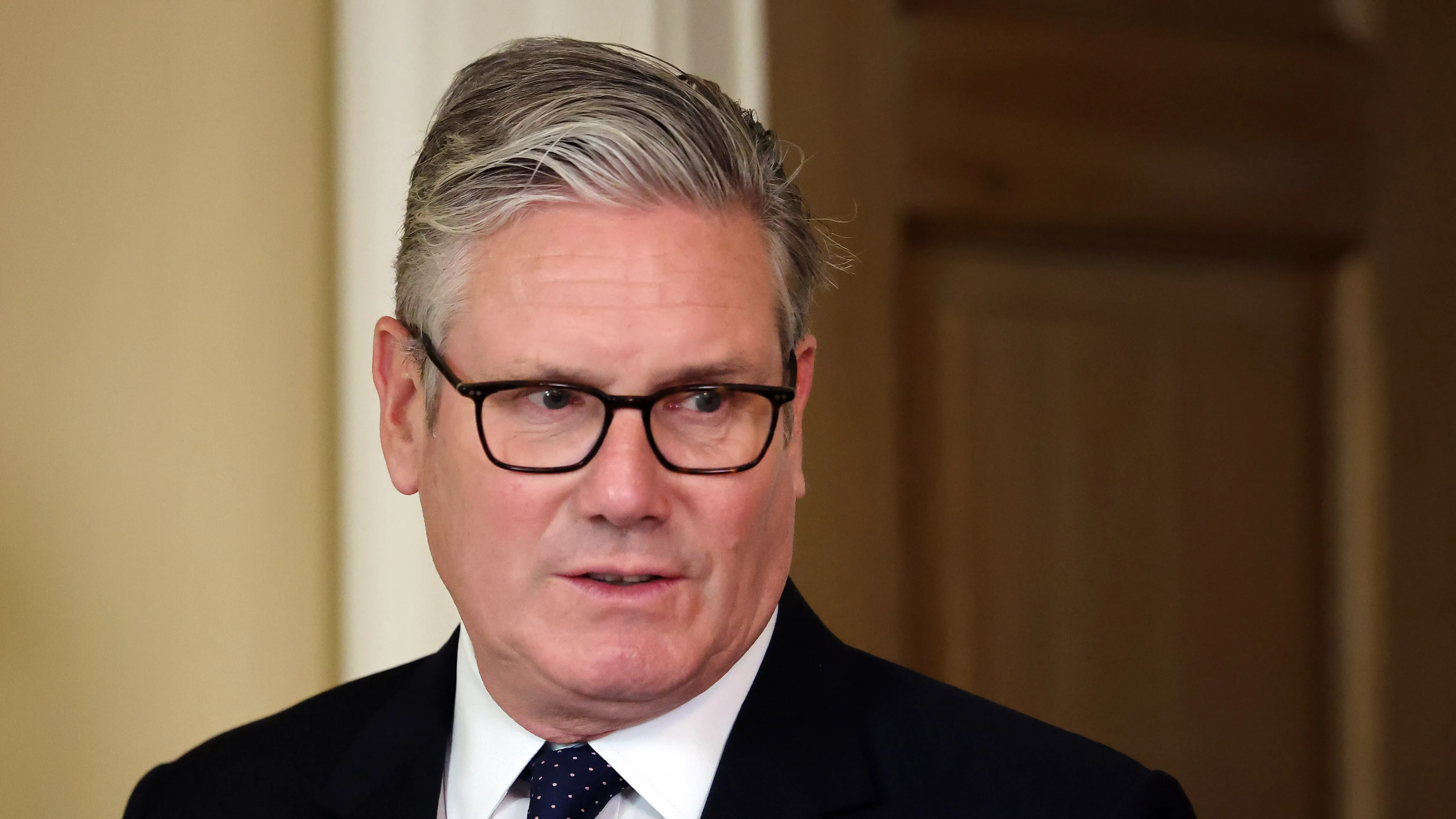
UK Unveils Landmark Ban On Under-16 Social Media Use, Sparking Bipartisan Support And Widespread Criticism
Prime Minister Keir Starmer announced sweeping new online safety rules on Monday that will formally ban all children under the age of 16 from accessing mainstream social media platforms across the United Kingdom.
“The case for action could not be clearer,” Starmer wrote in a public post on X. “Social media is eroding our children’s well-being and putting them at constant risk of harm. Our young people deserve far better than the status quo.”
Under the new framework, users under 16 will be blocked from all major social platforms including Facebook, Instagram, X, TikTok, Snapchat, and YouTube. The ban will not extend to end-to-end encrypted personal messaging services WhatsApp and Signal, which are most often used for private family and friend communication. Separately, the government is raising the mandatory minimum age for interacting with AI chatbots built to mimic romantic relationships to 18.
The full set of rules is on track to take effect in spring 2027. Additional restrictions will also be rolled out alongside the under-16 ban: all platforms will be prohibited from allowing livestreaming by users under 16, and from enabling unconnected strangers to initiate contact with minor accounts. To curb harmful late-night compulsive scrolling, the government is also considering a mandatory overnight social media curfew for all users under 18, with full policy details set to be published in July.
Downing Street frames the under-16 ban as a long-overdue intervention to protect children from graphic extreme content and pervasive online harms such as bullying and harassment. “This is a clear line in the sand,” Starmer added. “Big Tech had every chance to fix this problem themselves and they failed. Now we are stepping in to protect children, back parents, and build a safer new normal for future generations.”
Meta, X, and TikTok did not immediately respond to requests for comment on the new rules. Representatives from YouTube and Snap have already pushed back on the blanket ban, however. “YouTube is a critical educational and community resource for young people, educators, and parents,” said YouTube spokesperson Jay Stoll. “A blanket ban pushes kids out of curated, supervised, beneficial experiences on our platform and drives them toward unregulated, far less safe anonymous services.”
Frederika Cook, head of public policy at Snap Inc., which owns Snapchat, echoed that criticism. “The vast majority of time teens spend on Snapchat is in private messaging between trusted friends and family,” Cook explained. “An outright ban that disconnects teens from these relationships doesn’t make them safer—it simply pushes them to less regulated, more dangerous platforms.”
While UK politicians have debated restricting teen social media use for decades, the policy gained broad mainstream traction after Australia implemented the world’s first national under-16 social media ban last November. Multiple members of Parliament told WIRED the issue has become surprisingly prominent in recent elections at every level of government, and even opposition parties have publicly come out in support of the ban.
The UK’s policy announcement follows a public consultation that ran from March to May 2025, drawing more than 100,000 submissions from parents, academics, lobbyists, government bodies, and other stakeholders. Starmer’s government unveiled the new rules before publishing the full consultation results, which it has pledged to release by the end of summer.
A former senior special adviser to Starmer’s Labour government, who requested anonymity to discuss internal party matters, said the prime minister rushed the ban through to shore up parliamentary support amid growing speculation of a leadership challenge. “This is a top-tier issue for voters, and high-pressure by-elections—the UK equivalent of U.S. special elections—and threats of a leadership challenge have forced Downing Street to move faster than planned,” the adviser said.
A preliminary government research summary of the consultation found respondents were broadly split into three camps: those who supported a full ban on under-16 social media use, those who backed targeted restrictions on high-risk features only, and those who opposed any form of government-mandated restriction.
More than 90 percent of parent respondents who participated in the consultation support an outright ban. One of the most vocal advocates is Esther Ghey, mother of transgender teenager Brianna Ghey, who was murdered by two fellow schoolchildren in 2023. In her submission, Ghey wrote that her daughter’s mental health struggles were “significantly exacerbated by the harmful content she was consuming online.”
Critics who favor targeted restrictions over a full ban argue the blanket ban is an overly blunt tool that fails to address root causes of harm. “Something has to change, absolutely,” said Rowan Ferguson, policy manager at the Molly Rose Foundation, a UK suicide prevention charity. “But what we’re really concerned about with the ban is that the government is rushing into solutions that the evidence just doesn’t support, rather than addressing the actual causes of harm.” Ferguson and other critics note the ban does nothing to tackle the inherently addictive algorithmic design of social media products, which they call the core of the problem.
“It feels very comforting, doesn’t it? We’ve got this policy that will nip the problem in the bud,” said Emily Setty, associate professor of criminology at the University of Surrey, whose research focuses on young people’s online sexual behaviors. “My fear is that this ban will be performative—and everything else will remain the same.”
The UK government press office did not respond immediately to a request for comment on these criticisms.
Early data from Australia’s 7-month-old ban suggests these concerns are well-founded. A recent study by Australia’s online safety regulator eSafety found that 70 percent of under-16s in the country still access banned social media platforms. In March, the regulator announced it was investigating Snap, TikTok, Meta, and YouTube for potential non-compliance. Teens reportedly bypass restrictions easily by using virtual private networks to hide their location or entering false birth dates when creating accounts.
After Australia implemented its ban in November, Meta accused the government of “failing to properly consider the evidence,” while X CEO Elon Musk called the policy “a backdoor way to control access to the internet by all Australians.” Reddit filed a lawsuit against the Australian government that same month to overturn the rule.
A lobbyist for a major UK tech industry group, who requested anonymity to discuss sensitive lobbying efforts, told WIRED that social media companies have flooded the inboxes of UK members of Parliament in recent weeks to dispute proposed policy language that would define which platforms fall under the ban.
The new rules have also exposed internal rifts within the UK government, the lobbyist added: senior cabinet ministers worry about alienating major tech companies, while backbench MPs largely favor a far more aggressive approach to regulation.
The policy could also stoke new tensions between the UK and the U.S. government, which has long aggressively protected Silicon Valley firms. In its submission to the UK’s public consultation, the U.S. government advocated for narrow restrictions only on pornographic and other adult content, writing: “We have concerns about regulations that impose disproportionate compliance burdens on American companies.”
U.S. officials have previously complained that the UK’s existing Online Safety Act, which requires platforms to block children from age-inappropriate content, infringes on free speech. In February 2025, U.S. Vice President JD Vance claimed that free speech in the UK was “in retreat.”
Supporters of stricter online child protection frame the new ban as a “down payment” for more comprehensive future reforms to shield children from online harm. For example, the Molly Rose Foundation is calling on the UK government to expand the Online Safety Act to impose a broad legal “duty of care” on platform operators that would end surface-level, tick-box compliance.
“At the end of the day, these business models prioritize profit over children’s safety,” Ferguson said. “It’s right that we challenge that as hard as we possibly can.”