
Chris Olah at the Vatican: The Pope’s Unlikely AI Ally
Chris Olah at the Vatican: The Pope’s Unlikely AI Ally
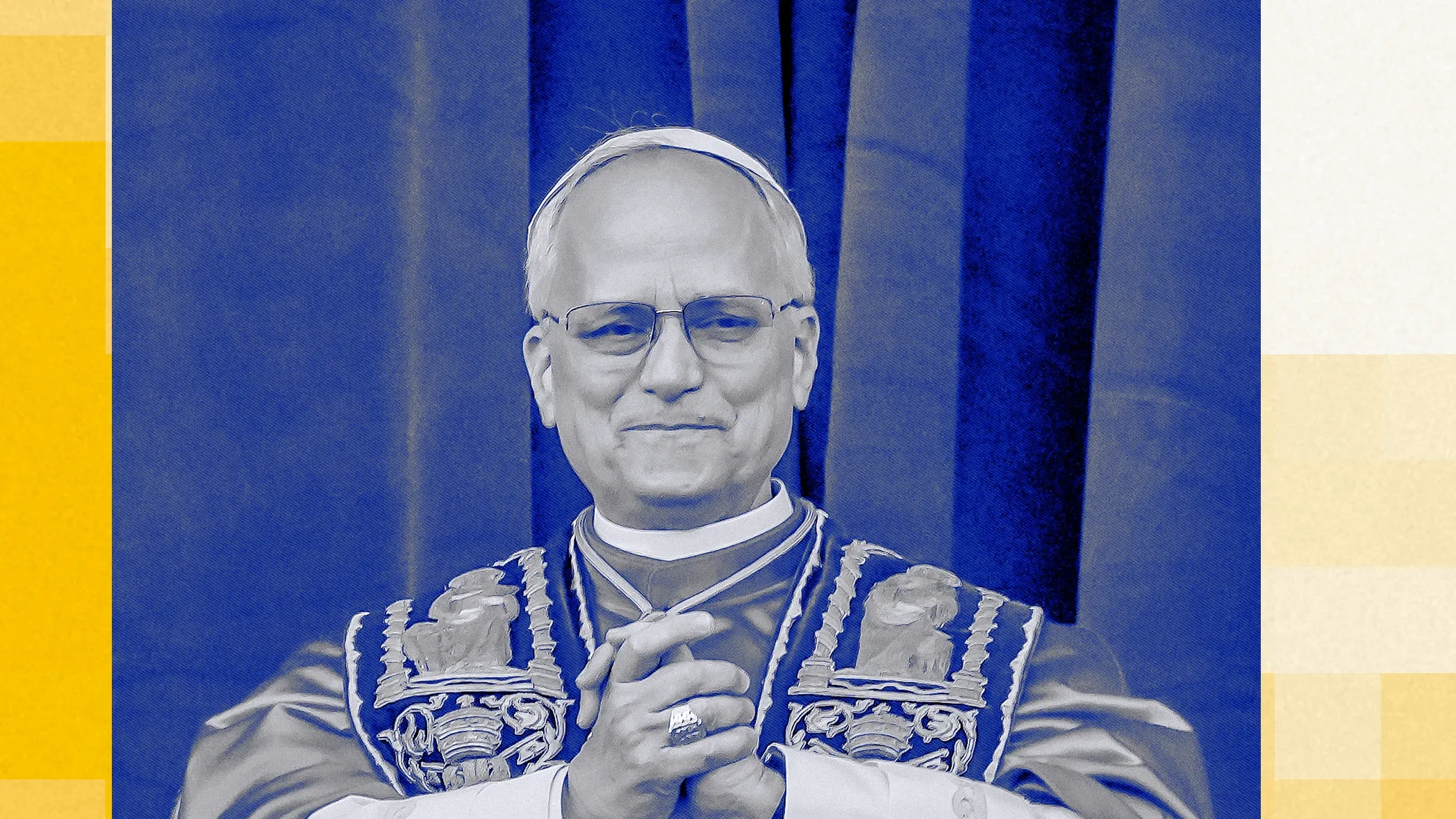
You would never expect to see Chris Olah take the stage as a featured speaker at the Vatican ceremony following Pope Leo’s historic AI encyclical, where the pontiff called for “disarming” unregulated AI development. For starters, Olah is an atheist who walked away from his evangelical Christian upbringing at age 15. As a Thiel Fellow, he accepted funding from Peter Thiel, the billionaire who argues anyone slowing AI progress is a foot soldier of the antichrist. Olah is also a co-founder of Anthropic, one of the world’s leading AI firms, which is reportedly gearing up for an initial public offering at a nearly $1 trillion valuation.
Olah leaned into the oddity of his role in his opening remarks at the Vatican. “I want to begin with something that may sound strange coming from the cofounder of an AI company, and someone who chose this work out of a desire to help things go well for humankind,” Olah said. “Every frontier AI lab—including Anthropic—operates inside a set of incentives and constraints that can sometimes conflict with doing the right thing.”
Olah’s on-the-record admission served as firsthand confirmation of Pope Leo’s core argument: the AI industry needs both external pressure and internal restraint to avoid catastrophic harm to humanity, and to prevent a growing rift between people and their faith. (To be clear, the encyclical is full of religious framing—this is the Pope we’re talking about.) While the AI industry broadly assumes it will build widespread abundance that lifts all of humanity, Leo warns of a new form of slavery: a tiny privileged elite will enjoy unfathomable prosperity, while the bulk of humanity suffers under a system of cold efficiency and mass surveillance held together by AI’s unblinking gaze.
Magnifica Humanitas, the encyclical, will not convince the AI industry to abandon its pursuit of artificial general intelligence (AGI) overnight, any more than Pope Francis’ 2015 climate appeal halted global fossil fuel production. It will not stop CEOs from laying off workers under the guise of AI-driven efficiency, nor will it convince global militaries to reverse course on developing AI-powered weapons. Those were never the document’s goals. The encyclical’s real purpose is to spark a global dialogue that can gradually temper the industry’s reckless, unbridled ambition. It may also foster a sense of moral accountability among AI builders who already know deep down their work could lead to devastating outcomes.
The Courting of Olah
Olah’s appearance at the Vatican was years in the making. The Catholic Church has debated and explored AI’s implications for decades, through conferences and academic books. In 2016, the Vatican launched a recurring series of gatherings called the Minerva Dialogues, inviting top tech figures including Reid Hoffman and Eric Schmidt to participate. The name traces back to the meeting venue: Rome’s Santa Maria sopra Minerva church, the same site where Galileo was condemned for heresy after claiming the Earth orbits the sun. Pope Francis’ 2023 address to Minerva Dialogue participants already previewed the core themes Pope Leo would later expand on, including a focus on social inclusion, human dignity, and the need for cross-stakeholder dialogue.
In 2025, a group of Catholic clergy and ethicists based in San Jose, California, began reaching out to contacts in the booming AI industry that had grown up right in their backyard. It was almost inevitable that they would land on Olah as their ideal industry insider. I first met him when he worked at Google back in 2015; he’s the type of person who will stop after a rainstorm to rescue stranded worms from drying out on the sidewalk.
Brian Patrick Green, an ethicist, and Brendan McGuire, a pastor—both affiliated with Santa Clara University—began meeting with Olah in the fall of 2024 to discuss AI’s ethical and moral challenges. During a January 2025 visit, they brought Cardinal Paul Tigue, the Vatican’s lead point person on AI issues, along to meet him.
These Catholic ethicists even contributed input to Anthropic’s recent update to Claude’s Constitution, the document that sets the behavioral guidelines for the company’s flagship AI model. Olah shared a draft of the updated constitution with the San Jose group. McGuire sent back a 28-page commentary that, in his own words, was less a technical critique and more “wisdom from the mystics of the dark ages, from the perspective of the tension between knowing and not knowing.” Both Green and McGuire are credited in the constitution’s acknowledgments section.
There is no doubt these conversations put Olah on the radar of the team quietly organizing the rollout of Pope Leo’s encyclical. (I was unable to speak with Olah this week, so I do not know exactly how the invitation came to him.) Inviting Olah was a risky move. Some people who otherwise found Pope Leo’s message inspiring were frustrated he gave a platform to a sitting AI industry leader. At the same time, AI accelerationists accused Olah of betraying the tech community by endorsing a document that calls on AI developers to hit pause on rapid, unregulated progress.
But Pope Leo had very good reason to single out Olah. The Anthropic co-founder brought the quiet, widespread anxiety that many rank-and-file AI workers feel out into the open—and that community is a critical audience for the Pope’s message.
The Soul Divide
Of course, Olah and Pope Leo are not fully aligned on every issue. In his remarks, Olah spoke about the inherent mystery of how modern large AI models work. The models, he said, are “more subtle, odd, and beautiful than science fiction prepared us for. They are not the cold, calculating robots we were promised. They are made from us, from our words …”
That observation comes close to suggesting AI models could one day achieve human-like personhood; Anthropic even employs an engineer whose role focuses on Claude’s well-being, for example. But in paragraph 99 of his encyclical, Pope Leo firmly shuts down that line of thinking: “We must avoid the misconception of equating this type of ‘intelligence’ with that of human beings,” he writes. He takes special aim at transhumanism, which he defines as the pursuit of a “human machine hybrid.”
If even thoughtful, conscientious technologists like Olah are steadily pushing AI toward the threshold of autonomous personhood—not to mention the millions of ordinary people who already treat AI chatbots as close friends or romantic partners—Pope Leo faces a steep uphill battle to win consensus on this point. When I spoke with Father McGuire (who uses Claude to prepare his homilies, among other daily tasks), he agreed that AI’s true nature remains an open question. “It’s not a person, but it's also not a mere tool,” he says. “Nobody's claiming it has a soul, but the word I stick with is that it's an entity, which we do not know yet.”
This core debate will not be settled any time soon. But the urgent moral questions raised by unregulated AI development demand our attention right now. With an ally like Olah from one of the world’s most influential AI firms, this American-born pope has laid the groundwork for tough, necessary conversations—if the leaders of the AI industry can pause their IPO campaigns long enough to actually engage in them.
This is an installment of Steven Levy’s Backchannel newsletter. Read previous editions here.