
Creative Workarounds
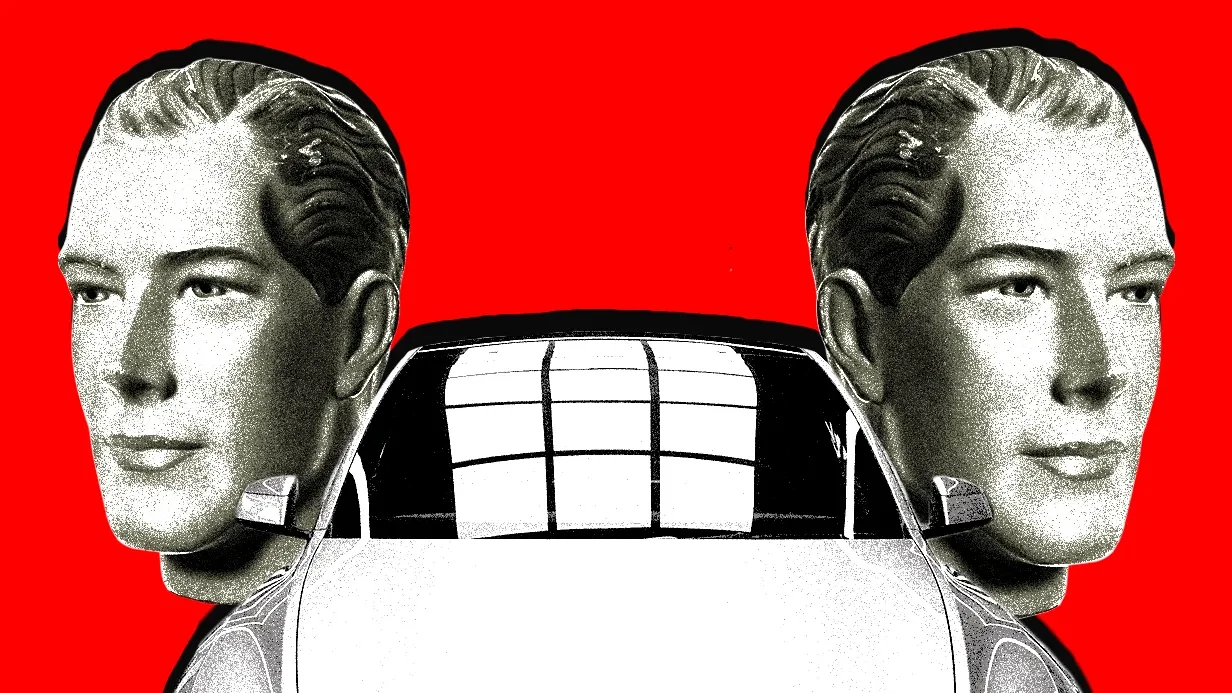
For just $30 in China, you can get Dwayne “The Rock” Johnson to “drive” your Tesla—sort of. It sounds far too cheap to be true, and that’s because it is. What you’re actually purchasing isn’t an A-list celebrity behind the wheel, but a tiny replica of The Rock’s head, designed to sit above your rearview mirror and fool Tesla’s system into thinking an alert driver is in the driver’s seat.
Tesla’s assisted driving technology cannot distinguish between the novelty figurine and a real human, which lets the actual driver look away from the road, scroll through their phone, or even doze off—all activities that are explicitly banned when the brand’s driver-assist features are active.
Last week, clips of these mini heads in use inside Teslas went viral across Chinese social platforms. I went down an internet rabbit hole browsing e-commerce sites and driver forums to learn more about the trend, and found that these figurines come in dozens of designs, most modeled after Hollywood or Chinese celebrities. Many are repurposed action figures or custom printed novelties, and they are just one example of the creative but extremely dangerous workarounds Chinese Tesla owners have developed to bypass the carmaker’s mandatory driver safety guardrails.
Listings for these fake heads are easy to find on major Chinese e-commerce platforms including Taobao, Xianyu, and Douyin. Prices range from $10 to $40, depending on how detailed the design is. Owners mount them to the car’s ceiling, windshield, or rearview mirror, positioned specifically to block the in-cabin camera’s view of the real driver’s head, and nothing else.
One Tesla Model 3 owner in China (who asked to remain anonymous, as Tesla prohibits these DIY hacks) told me his mini head works perfectly. During a recent road trip, he said he enabled highway autopilot and used his knockoff Dwayne Johnson head—a slightly wonky but clearly recognizable bald replica—for 250 miles of his 400-mile journey. Normally, Tesla’s system intervenes quickly when it detects a distracted driver, but with the fake head in place, he said he could go 30 minutes without any system alerts or interruptions.
In a video he shared with me, the driver eats roasted sunflower seeds with one hand and films his trick with the other, while the suction-cupped fake head fully blocks the camera from seeing his activity. “You should get a toy head about the size of a ping pong ball,” he advised other Tesla drivers on a Chinese platform where owners share workaround tips. “If it’s too small, the camera won’t be able to focus on it.”
Tesla’s most advanced driver-assistance package, Full Self-Driving (Supervised), is still not available to consumers in China. Drivers in the country only have access to more basic features including adaptive cruise control, autosteering, and limited autopilot for select urban roads. Because Tesla vehicles are not fully autonomous, the brand requires drivers to stay focused on the road at all times when using assist features, and uses multiple monitoring tools (including a camera mounted above the windshield) to enforce this rule. If the system detects a driver not looking ahead for several seconds, it will first demand the driver refocus. If the driver does not comply, Tesla can automatically shut off autopilot or even bar the driver from using driver-assist features for up to a week.
Tesla owners in other markets, including the U.S., have long created workarounds to bypass the brand’s safety controls. Drivers have tried everything from wearing sunglasses to throw off the camera’s eye tracking, to attaching weights to the steering wheel to trick the system into thinking a driver is still holding it. Some Reddit users even specifically seek out older Tesla models with less capable in-cabin cameras and sensors just to avoid strict monitoring.
The current wave of camera-tricking gadgets started spreading across China in October, shortly after Tesla rolled out a software update that activated mandatory distracted driver monitoring via the in-car camera for all Chinese-market vehicles. Drivers quickly began searching for ways around the new rule. At first, many blocked the camera entirely with webcam privacy covers, but Tesla soon issued a warning that driver-assist features would stop working if the camera was obstructed. That’s when the fake heads emerged.
Creative Workarounds
Instead of a 3D fake head, some Chinese Tesla owners simply hang a static photo of a person’s face in front of the in-cabin camera. Others take the trick a step further with lenticular prints—textured novelty cards that shift between two images when viewed from different angles. One popular design alternates between photos of a person with open and closed eyes, creating the illusion of natural blinking when the card sways gently as the car moves.
The most high-tech workaround I found is a pocket-sized display screen designed to sit in front of the in-cabin camera, which plays a continuous loop of a person blinking and moving their head naturally. Posing as a prospective buyer, I contacted the seller, who claimed the device has been tested on Tesla’s Model S, Model X, and Cybertruck, and achieves a “0% error rate” when fooling the system. They also noted they have already sold the device to customers in the U.S., Canada, and South Korea (markets where full FSD is available), and the tiny screen worked perfectly for all of them.
Right now, these camera-tricking gadgets remain a niche market dominated by small DIY sellers. The product listings I found had only sold a few dozen units each. But if the trend grows in popularity, it is almost certain that Tesla will crack down on the sales of these gadgets. I reached out to Tesla to ask if the company is aware of these products and whether it plans to take action against sellers, but the company did not respond.
Not everyone supports these hacks, and many Chinese social media users have criticized their use. In comments under promotional videos, users often compare the gadgets to seatbelt bypass clips—cheap products that let drivers avoid wearing a seatbelt, putting everyone at risk for a tiny bit of extra convenience.
I’ll admit I was surprised that a simple toy head is all it takes to trick Tesla’s system, especially given how far artificial intelligence has advanced in recent years. If car companies want to convince the public that their driver-assistance features are safe and do not enable distracted driving, they still have a lot of work left to do.
This is an edition of Zeyi Yang and Louise Matsakis’ Made in China newsletter. Read previous editions here.